Water-damaged drywall
Roof, plumbing and window leaks: drying, cutting away mushy board and rebuilding the section.
Moisture and leak repair, step by step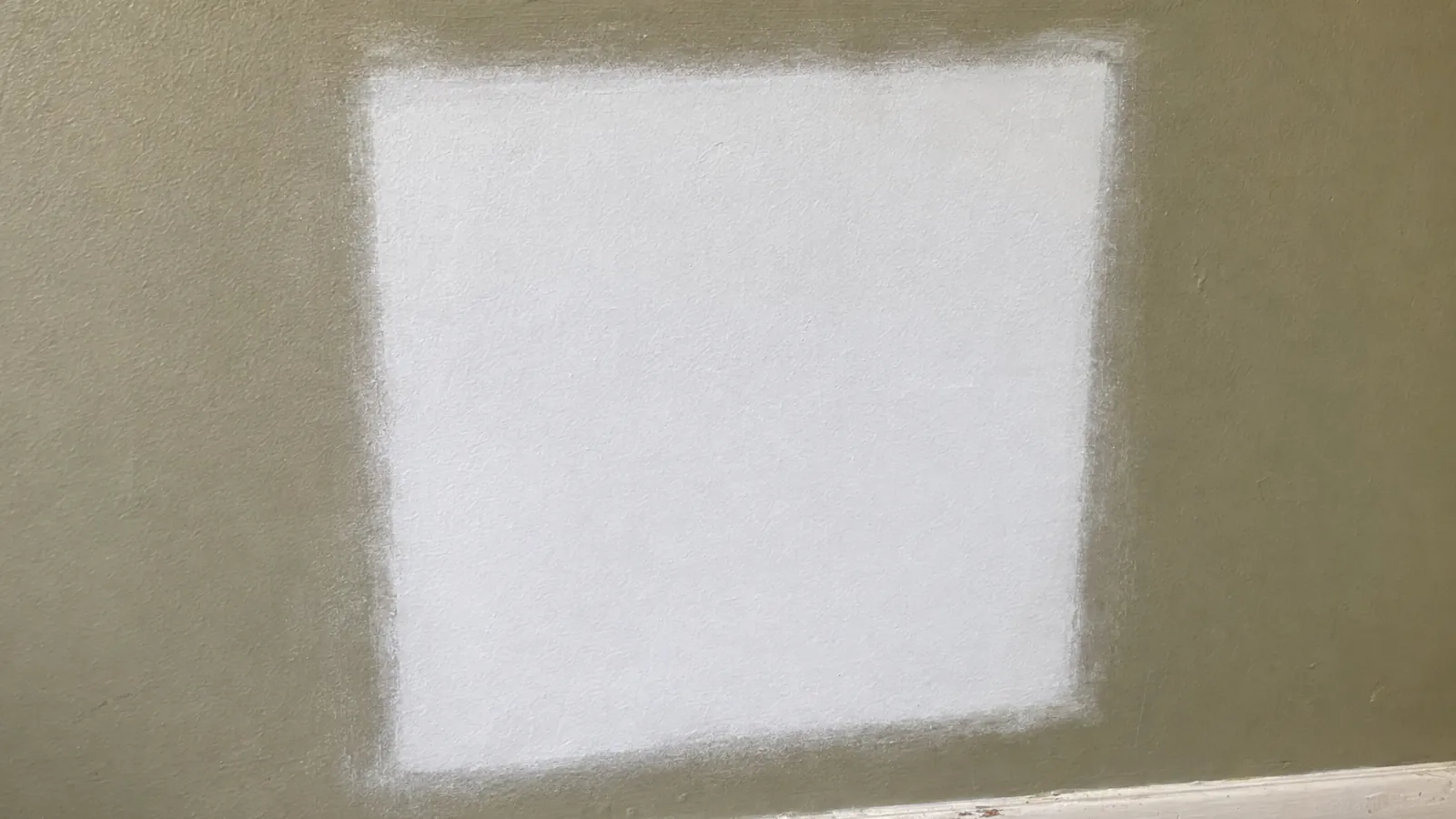
Rain-soaked ceilings, cracked plaster, doorknob holes and stained corners, rebuilt layer by layer and textured until the mended spot blends into the surface beside it.
A drywall pro on this end of the county will ring you, talk the wall over and price it before work starts.
Call 7 days, 7am–9pm
Snapshot by textSize decides nearly everything about a wall mend: the first material in, the number of coats, how many days the job spans and how much paint follows. Roughly, it scales like this.
Nail pops, picture-hanger holes and a shallow dent where a chair back hit. Twenty-minute hot mud fills the void without slumping, and a whisper of lightweight topping goes over it with a 6-inch knife. Two or three passes, a light sanding, a dab of texture and spot primer usually wrap it up in one short sitting.
At this size the opening gets squared off with a drywall saw, a couple of wood cleats are screwed in behind its rim, and a fresh gypsum insert goes in level with the face. Paper tape in a bed of hot mud covers the joints, and each coat after that reaches farther out with 10- and 12-inch blades. Finish coats need to cure hard, so plan on two days.
Soaked panels, or plaster that has let go of its lath, are removed right back to the studs or joists. New board is fastened up, any outside corner gets fresh bead, galvanized or paper-faced, and each joint is taped and coated. Count on several curing stages, new texture over the entire area and primer ahead of paint.
One wrinkle with Astoria's older houses: lime or gypsum plaster on wood lath usually builds out fatter than one half-inch gypsum sheet, so a replacement panel gets shims or a second layer behind it until both faces meet in one plane.
Published national figures make a fair yardstick. Fixr's cost page on drywall work, last revised January 2025, places most jobs from $200 to $550, averaging $350 nationwide. Its holes category spans roughly $60 to $200, cracks go from $60 up to about $330, and leak damage confined to one room lands near $400 to $800.
Bear in mind these are countrywide numbers, not what an Astoria job will run. Your real figure arrives from the pro, ahead of any work. Here is what nudges it higher or lower:
On hourly work for small jobs, Fixr reports most contractors bill $70 to $80 per hour.
Roof, plumbing and window leaks: drying, cutting away mushy board and rebuilding the section.
Moisture and leak repair, step by stepSplit seams, cracks fanning off door corners, and old plaster parting company with its lath.
How a crack gets opened, taped and skimmedBrown rings and yellow blotches locked down under pigmented shellac, then retextured and painted.
Stain sealing and ceiling repairDoorknob punctures, anchor holes and access cut-outs closed with cleats, tape and wide coats.
Patching holes from pinhole to panelPlenty of wall damage is on purpose. Pulling a new circuit through an old house means small access cuts along the stud bays so the cable can be fished. Reaching a shutoff or a sluggish drain means opening a wall. Duct and heating work leaves square gaps, and a fresh data line or speaker run can leave a trail of small ones. None of those trades does finish work, so the gaps sit there until somebody closes them.
The right sequence is to hold off until that trade is completely done and any required inspection has passed. Each gap is then trimmed square, given wood cleats or drywall clips behind it, fitted with an insert and taped. A first pass of hot mud locks the insert in place without shrinkage, and every later pass fans wider until the border melts into the wall plane. With plaster, crumbly rims around the cut are screwed tight with washers beforehand.
Think the plumber might want that valve again some day? A screw-on hatch over the opening costs less now than a finished patch, and it spares the wall another cut later.
Sanded joint compound throws a talc-like white powder that drifts from room to room. Good prep means plastic sheeting across doorways, covers on furniture and canvas on the floor. Asking whether the last pass is done with a shop-vac sander or a damp sponge is worthwhile, since either one cuts the powder a lot.
Hot mud cures by reaction rather than evaporation, so a 20-, 45- or 90-minute bag cures on its own clock even in muggy air. Bucket mud dries only as its water leaves, and with Astoria's average humidity over 80 percent all twelve months, it can lag well behind whatever the label promises.
Primer seals the finished mend so the topcoat absorbs uniformly. Fresh primer is brighter than most walls, so a primed spot looks loud until color goes over it. Settle up front whether paint belongs in the price.
A small hole often wraps up in one sitting. Anything with taped joints and three coats usually stretches across two or three days, because every layer must cure first.
A mend fanned out wide and painted tends to go unnoticed from across the room, but low light grazing across flat paint can still catch a slight sheen change. Repainting that wall in full hides it best.
Most walls carry a texture, and copying it is half the craft. Smooth walls want extra skim passes. Orange peel and knockdown come out of a hopper gun as spatter; for knockdown, a broad blade lightly flattens the peaks once they start to firm up. Skip trowel goes on with a hand trowel in loose, overlapping arcs. Popcorn ceilings take a spray-can or hopper acoustic mix. Trying the finish on an offcut first helps dial it in before the wall itself gets touched.
Yes. Work is booked throughout the northern end of Clatsop County, river towns and beach towns alike.
Just west over Youngs Bay, Hammond included, out toward the mouth of the Columbia.
Down the coast to the south-southwest, where houses sit on level ground close to the sand.
Upriver to the east, in the rural country strung out along the Columbia's Oregon shore.
Because there is so much of it. The 1991–2020 climate normals from Astoria Regional Airport list 70.26 inches as the yearly precipitation normal, with measurable rain falling on 191 days in an average year. November tops the chart near 11 inches, December and January trail just behind, and July sees under an inch.
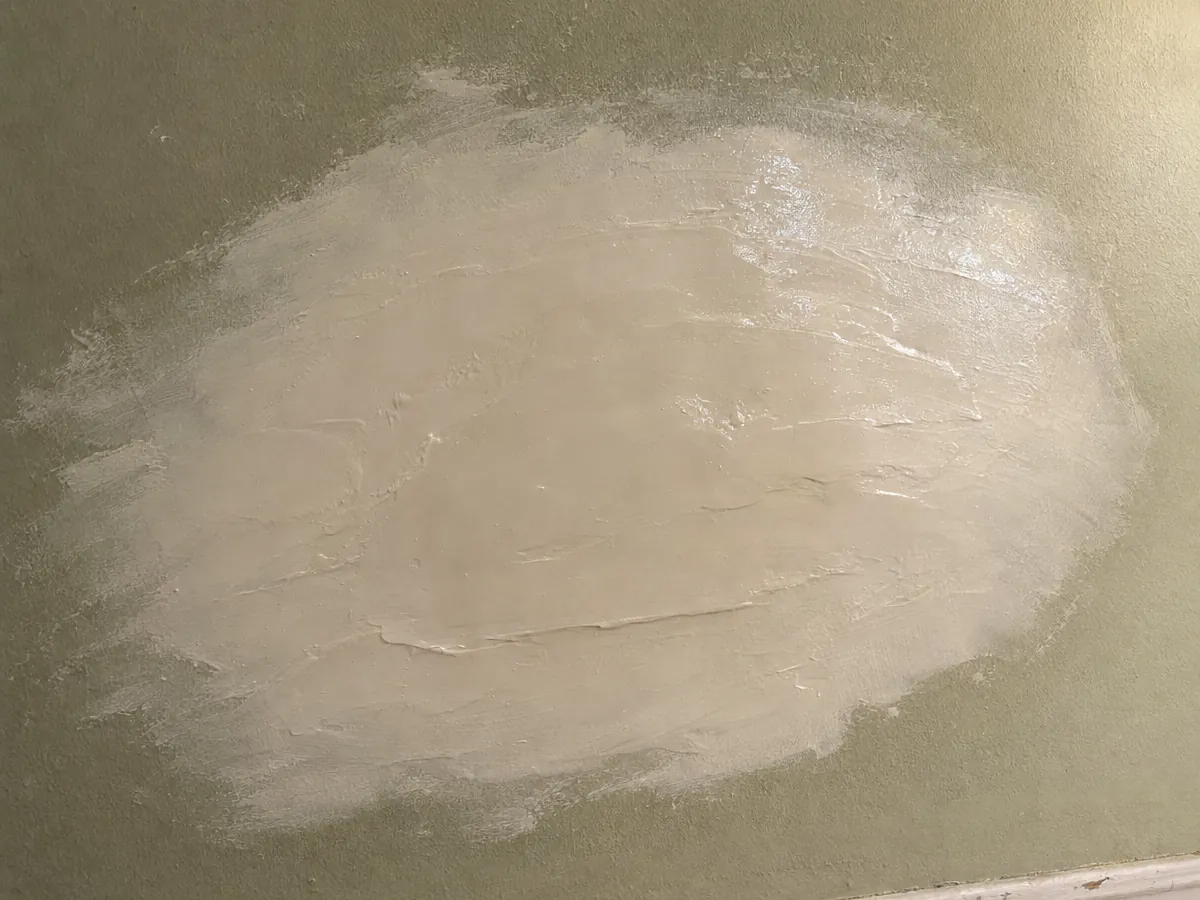
Long soggy spells search out every tired chimney flashing, roof boot and window head. Indoors, that turns up as tea-colored rings overhead, blistered paint beneath a sill, and tape peeling off an outside corner.
Average humidity sits above 80 percent in every month, so a bathroom with a weak exhaust fan grows mildew freckles and softens the facing paper on the board beside the tub.
July and August bring the least rain. As framing and old plaster give up moisture they shrink slightly, and that is when fine cracks off door corners and along ceiling joints like to appear.
Oregon's geology department has published a landslide inventory and susceptibility maps for the City of Astoria. A crack whose gap keeps widening, or a door that starts binding out of nowhere, deserves a look at the ground and foundation before anyone patches it.
Rings and blotches have a page of their own on ceiling stain repair, covering how the discoloration is locked down ahead of paint.
Here are familiar kinds of damage, described generally, each paired with the work a lasting fix calls for.
The ragged opening is trimmed to a rectangle, wood cleats go behind it and a new gypsum insert is screwed in. Three coats fanned out wide, then texture and primer. A spring stop on the baseboard spares the wall next time.
First comes the source: a tired wax ring under the toilet, a tub overflow gasket or the shower valve. Next the board is metered for moisture, any mushy piece is replaced, and the ring is locked down under shellac before texture and paint.
Loose plaster is cinched to the lath with plaster washers, the crack itself gets a slight V cut along it, and fiberglass mesh set in hot mud spans it before a skim coat evens the surface.
Every hole gets packed with hot mud, skimmed level, spot-primed and blended with whatever texture surrounds it. A cluster like that is normally one modest job rather than several.
Several of these belong with patching drywall holes or mending water-damaged walls, and plaster that has split is covered under wall and ceiling crack repair.
Ring the phone number up top or text in a few pictures of the damage. Tell us which room, about how big, and if a leak was involved.
A drywall pro from this end of the county phones back, hears about the damage and quotes it. Work waits on your OK.
We book the job for days that suit you, leaving room for each coat to cure.
Ruined material comes out, cleats and new board go in, and joints are taped and layered with mud, each pass reaching farther than the last.
Everything is sanded, textured to blend with its surroundings and primed, ready for your own paint or for paint included in the price.
There is a fuller account of what Astoria Drywall Repair handles on the about page.
Say what happened and which room. Pictures help, and so does a rough size.
Whoever takes the job phones you first, asks about the damage and quotes it.